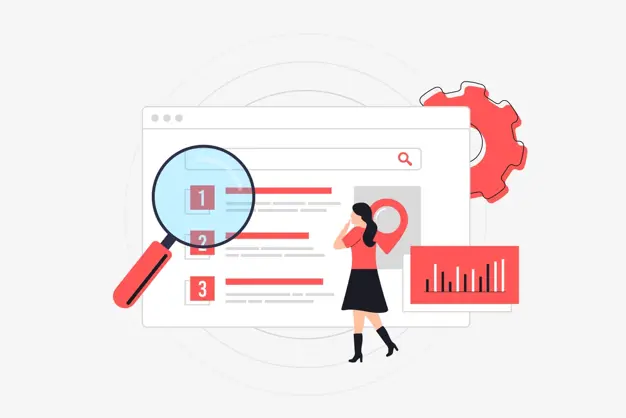
Google Rankings Explained: Why Rankings Change (and What to Do About It)
Why do your Google rankings rise one week and fall the next? Discover what’s really behind the shifts – and how to stay ahead in today’s SEO landscape.

Searchlight is Aztek's marketing news roundup that brings together the week’s most relevant developments in marketing, search, AI, and digital strategy, all in one place. We update this article throughout the week with news we think is worth your time, along with context to help you understand what changed, why it matters, and what it could mean for your business.
This week's topics:
When Google wrapped its March core update and then lit up another broad update on April 3, the search community knew something big was brewing. Early data confirms the second update tightens the screws on E-E-A-T signals (Experience, Expertise, Authoritativeness, Trust), rewarding pages that show real-world know-how and punishing templated, AI-only rewrites.
AIO Copilot’s tracking across 400 domains found pages with named, credentialed authors gained 22% more visibility after the April rollout, while faceless “staff writer” pieces slid backward. Google also appears better at spotting first-hand details, think product photos, proprietary data, step-by-step demos, and elevating them above generic summaries. In short, it’s cracking down on content that sounds informed versus content that is informed.
Google’s own “Helpful Content” guidance urges creators to audit Who, How, Why behind every page:
In the update’s sharper focus on Your-Money-Your-Life topics, and the bar rises even higher. Health, finance, and legal pages without verifiable expertise are already seeing double-digit drops.
Bottom line: Google is rewarding what people already look for, real expertise, first-hand insight, and brands they can trust. If those threads run through your content, you're fine. If they don’t, this update is your nudge to fix the gaps now, before the next shake-up hits.
The next big Google deadline lands on June 15, 2026. Two separate policy changes go live that day, and they share one clear message: respect the user. Google will start penalizing sites that trap the browser’s Back button, and it will roll Ads / GA4 data collection under a single Consent Mode switch.
Miss the mark and search visibility or reporting accuracy can disappear overnight.
| Change | What It Means for Your Site | Enforcement Source |
|---|---|---|
| Back-Button Hijacking Penalty | Pages that insert fake history states or redirect visitors when they press Back will be labeled spam. Rankings can drop or vanish. | Google confirmed that enforcement starts June 15th after a two-month grace period. |
| Consent Mode Takes Over Data Controls | “Google Signals” in GA4 stops governing ad cookies and IDs. Consent Mode settings in Google Ads become the single gatekeeper for ads and analytics data. If Consent Mode is missing or set to “denied,” remarketing lists and some conversion data will not populate. | Google’s update notes that GA4 moves to Consent Mode as its only control starting June 15th. |
Google says it wants a browsing experience where visitors can leave a page when they want and where data collection always reflects explicit permission. The back-button rule targets frustration and deceptive ad loops. The Consent Mode shift simplifies overlapping settings so user choices propagate consistently across Ads and Analytics. Both moves align with growing privacy regulation and ongoing user-experience expectations.
ad_storage, analytics_storage, ad_user_data, ad_personalization—so Google knows whether it can use cookies and IDs. Google’s help docs show the exact syntax.Google's June 15th privacy update bundles UX discipline and data transparency into one clear checkpoint. Scrub any back button traps first so visitors and Google’s crawlers experience clean navigation. Wire up Consent Mode next so GA4 and Google Ads keep recording the signals that power reporting and bidding.
These fixes are routine housekeeping that strengthen every other marketing effort. Finish them now and June 15th will feel like just another Monday: rankings stay visible, reports stay trustworthy, and ad dollars keep pulling their weight.
Google just confirmed that Dynamic Search Ads (DSA) will disappear and every legacy DSA campaign will auto-upgrade to AI Max by the end of September 2026. The change folds DSA’s URL-based ad creation into a smarter, broader AI framework. For marketers who have treated DSA as a low-maintenance safety net, the clock is already ticking.
Google wants one modern, AI-heavy option instead of maintaining parallel systems. AI Max keeps the familiar “crawl your site and build the ad” concept but layers in Gemini-powered query matching, headline generation, and brand, location, and URL controls that DSA never offered. The goal: more relevant reach with fewer manual knobs.
Taken together, AI Max promises broader coverage and roughly 7% more conversions at similar CPA when all features are enabled.
AI Max isn’t optional; Google is making it the new default. Teams that move first will have data, guardrails, and stakeholder confidence before the forced flip. Those who wait may spend early October untangling mismatched queries and shaky CPAs. Better to steer the change than to clean up after it.
Why do your Google rankings rise one week and fall the next? Discover what’s really behind the shifts – and how to stay ahead in today’s SEO landscape.

Search is undergoing a major structural shift due to AI advancements. Discover what’s changing and our strategies for embracing the new era of SEO in 2026.