Most websites that exist today were built for people. By that, we mean they were designed to be easy for humans to navigate and understand.
In 2026, that’s no longer the full story. AI systems are now reading your site too, and they can influence what prospects see about your business before they ever even click a link.
If your site is hard for machines to interpret, you risk being summarized inaccurately or missed altogether. Let’s get into what “AI-ready” actually means, along with practical steps you can take to get there.
What Does “AI-ready” Mean?
AI-ready means your site still works for humans, but it’s also easy for machine systems to interpret.
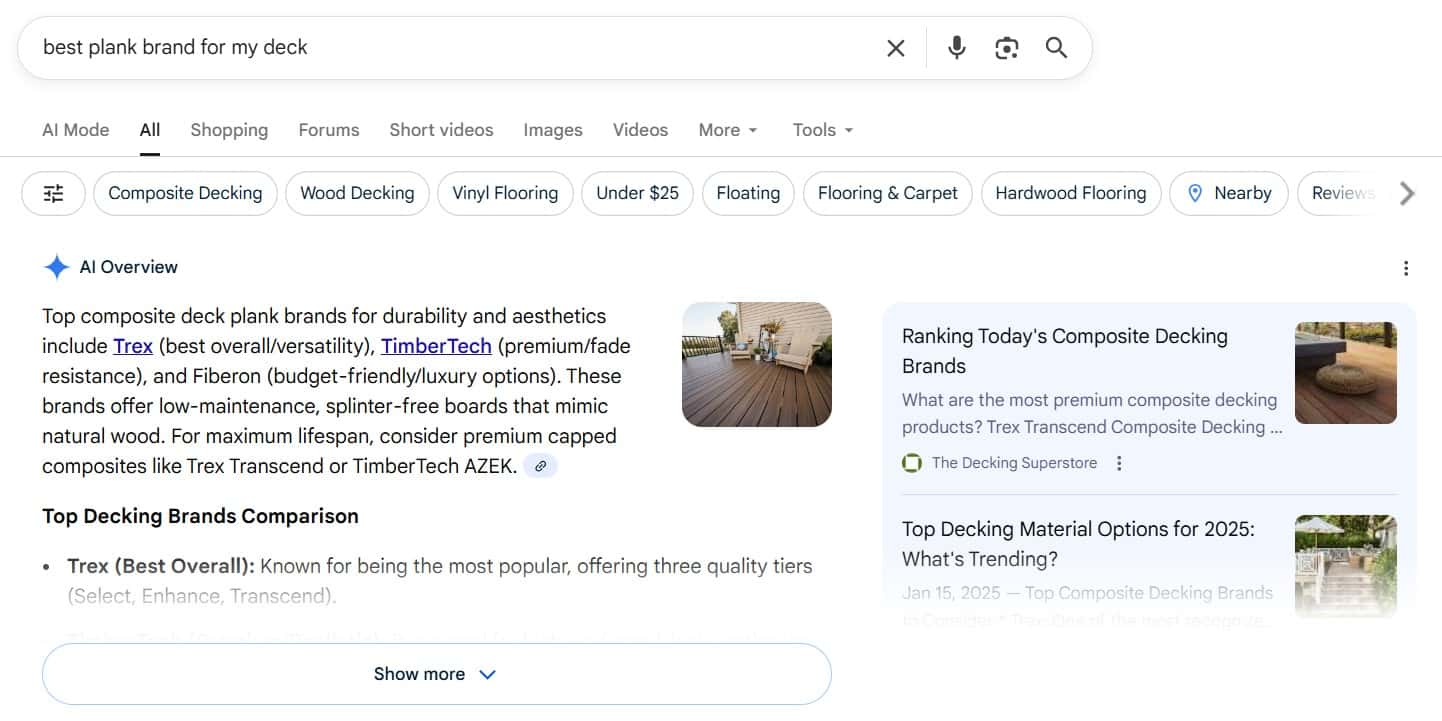
Search is shifting toward answer-first experiences, including Google AI Overviews. Instead of showing a list of links, these systems scan content, pull out key points, and generate responses. When your site is AI-ready, you increase the odds that your brand is cited correctly in these answer-first experiences, instead of being summarized loosely or left out entirely.
You also reduce the chances that AI tools pull outdated details or mix you up with a similar company. The payoff is better alignment between what you actually do and what AI systems recommend when people ask for solutions like yours.
How This Is Similar to Traditional SEO, and What’s Different
AI-readiness builds on the same foundation as traditional SEO:
- Clear structure
- Helpful content
- Strong credibility signals
If your pages are well-organized, accurate, and written to answer real questions, you’re already doing a lot of what AI systems need.
The difference is how your content gets used. In traditional search, the goal is often to earn a click from a results page. In answer-first experiences, the content may be pulled into a summary that replaces the click. That raises the bar for clarity and precision, because your information might be quoted or compared without your page being opened.
AI-readiness also puts more weight on consistency and context. One example is that if your services are vague or scattered across multiple pages, AI tools can easily misinterpret them. The best way to prevent that is to make key details easy to find, easy to verify, and aligned across your site.
What AI Looks for on Your Website
When AI reads your site, it looks for signals that your content is trustworthy and easy to follow. A few of the most important signals include:
- Schema markup: Structured data helps systems understand what a page is, what it contains, and how key details relate.
- Clear page structure: Consistent formatting like headings and clear sections make it easier to extract the right information.
- Conversational framing: Popular questions and direct answers mirror how people search, and how AI pulls meaning from content.
- Off-site credibility: Mentions on respected publication sites and communities help reinforce that your brand is referenced and trusted.
- For B2B, that looks like trade publications, partner sites, recognized industry associations, or credible review platforms where profiles and feedback are tied to real companies.
- For B2C, it looks like established media, reputable product review sites, and communities where recommendations are specific and consistent.
Together, these cues help AI decide whether your site is reliable enough to use in summaries and recommendations.
Quick checks to test your site:
- Run one key page through Google’s Rich Results Test. If it returns errors or shows no detected structured data, your schema likely needs attention.
- Scan your top service or product page for “skimmability.” If headings do not clearly describe each section, or if answers are buried in long paragraphs, AI systems have a harder time pulling the right takeaway.
Beyond Search: How AI Might Interact with Your Site
AI is not only helping people find your website, it’s also starting to influence what people see before they ever click.
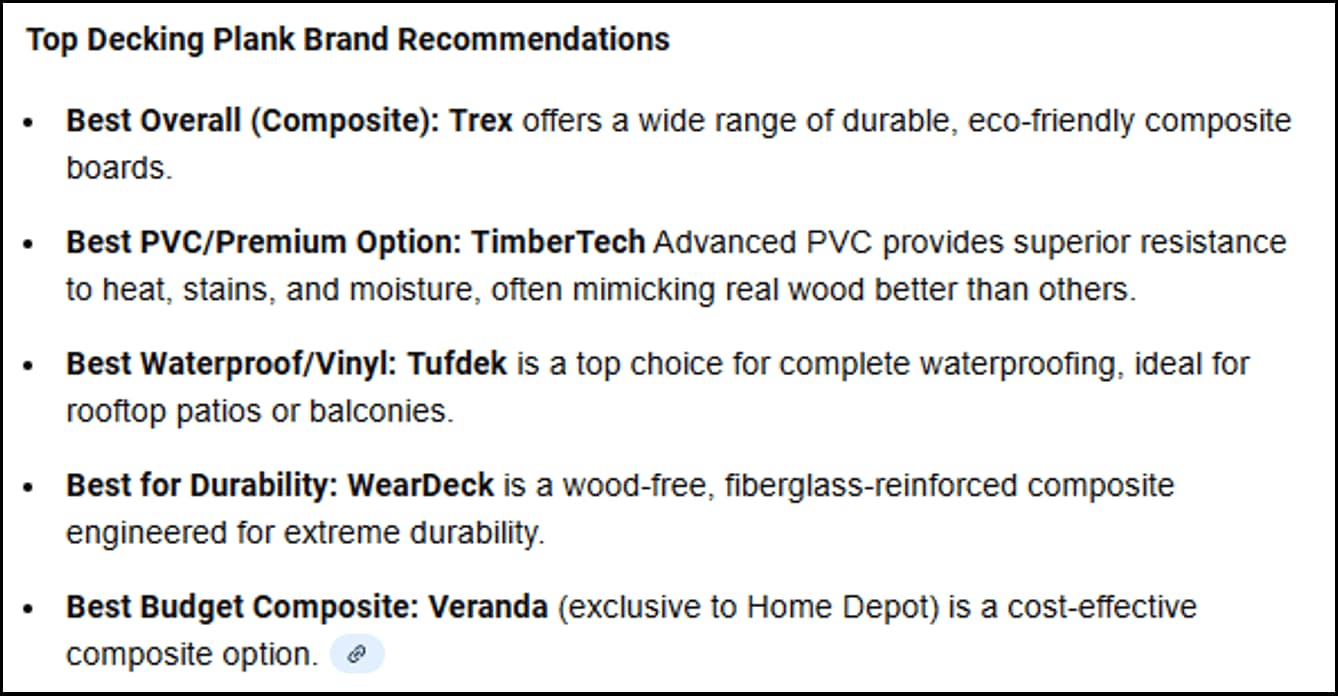
In eCommerce, for example, some AI shopping assistants can compare products and surface recommendations based on what they can understand from product pages. If your catalog and offering details are clearly labeled and consistent, these systems can represent you and your products/services more accurately.
Simple Ways to Start Preparing
You don’t need to rebuild your entire site to make it more AI-friendly. A few focused updates can improve how machines interpret your information:
- Keep key pages current: Refresh core service, product, and FAQ content so it reflects what is true right now.
- Write to answer questions: Add or expand FAQ sections that match how prospects actually ask things.
- Strengthen trust signals: Feature reviews, testimonials, and proof points where they matter most.
- Make it easy to be referenced: Create content worth citing, and look for ways your brand can be discussed in relevant communities.
- Audit structured data: Confirm schema is accurate and aligned with each page of your site.
Even small improvements like these can change how AI interprets your site.
Taking AI-readiness One Step Further
If you want to go beyond the basics, consider adding a machine-friendly layer that gives AI agents a reliable way to read and reference your content. The goal is to reduce guesswork by making key information available in a consistent, structured format.
Depending on your stack, that layer might be:
- A dedicated API that exposes core details like products, services, locations, and policies
- A structured subdomain that mirrors important pages in a predictable, machine-readable layout
- An MCP (Model Context Protocol) server that lets AI tools query approved information directly
When set up correctly, this layer does not replace your website, but rather sits alongside it and makes it easier for AI systems to pull accurate details and represent your business correctly in AI-driven experiences.
How Aztek Can Help Get Your Website AI-ready
AI-readiness can feel like a lot at once, especially right now, when it feels like new trends and tactics show up every month. Aztek can help you focus on practical steps that improve visibility in generative search and reduce friction for AI-driven experiences.
We start with an audit to see how your site reads to both people and machines. From there, we prioritize improvements that make the biggest difference, including refining schema and tightening page structure so it is easier for systems to interpret.
When you want to move beyond fundamentals, we can also help map what an agent-friendly experience could look like for your business and what it would take to support it. Reach out to Aztek any time and we’ll walk through what AI-readiness looks like for your site.