SEO vs. PPC: What Should You Invest In?
Rather than asking if SEO is better than PPC, consider how SEO and PPC can work together to increase traffic from search.

Searchlight is Aztek's marketing news roundup that brings together the week’s most relevant developments in marketing, search, AI, and digital strategy, all in one place. We update this article throughout the week with news we think is worth your time, along with context to help you understand what changed, why it matters, and what it could mean for your business.
This week's topics:
Google recently published new guidance on third-party SEO tools and services. It came just days after the May 2026 core update finished rolling out, giving marketers another reason to take a closer look at the tools, reports, and recommendations guiding their SEO decisions.
The message in the new documentation is not that third-party SEO tools are bad. It does make it clear, however, that they are not Google and their dashboards should not be treated like a direct view into Google’s ranking systems.
As AI search changes how people find information, vendors are promoting more AEO, GEO, AI visibility, and answer engine optimization services. Some of these tools can help teams spot issues and find opportunities. Others make confident claims that imply access, certainty, or Google approval they simply do not have.
Google’s guidance draws a clear line:
In other words: use SEO tools, but do not outsource your judgment to them.
For in-house marketers, this is a good time to audit your SEO stack.
Start by looking at the dashboards and reports your team relies on most. Are they helping you understand performance, or are they creating noise? Are recommendations tied to actual business outcomes, or are they based on generic scoring systems?
The best SEO decisions usually start with first-party data: Google Search Console, GA4, CRM data, form submissions, call tracking, and sales activity. Third-party tools can add helpful context, but they should not replace the data that shows how your site is actually performing.
That means before making a major SEO change, ask:
If the answer is unclear, slow down before adding another task to the roadmap.
For agencies, Google’s guidance reinforces something strong SEO partners should already be doing: explaining the “why.”
Clients should expect more than exported reports and automated recommendations. They should understand what work is being recommended, what data supports it, how it connects to business goals, and where it fits into the larger strategy.
That does not mean every SEO decision needs to come directly from a Google help doc. SEO still involves testing, experience, pattern recognition, and judgment. When a vendor makes a strong claim about what Google wants, that claim should be easy to explain and verify. No secret formulas. No guaranteed rankings. No hiding behind a dashboard.
Google’s new guidance is not a reason to ditch your SEO tools, but it is a reminder to use them responsibly. SEO is not magic, and it is not guesswork. It is a disciplined process of improving your website so users and search engines can understand, trust, and act on your content.
For years brands have treated WhatsApp, Messenger, and Instagram inboxes like crowded help desks. Meta Business Agent promises to flip that script. The new first-party AI chatbot invites companies to handle product questions, give recommendations, book appointments, and pass qualified leads to humans without ever leaving a chat thread.
Meta Business Agent is an opt-in feature that lives inside a business’s existing WhatsApp, Messenger, and Instagram accounts. Set-up takes minutes, or teams can connect deeper through the new Business Agent Platform for CRM and catalog integrations . Meta claims more than one million businesses already rely on an early version, and customers open more than one billion business chat threads every day . That volume explains why Meta is betting on automated conversations.
For marketing teams, the appeal makes sense. Customers are already asking questions in social inboxes, so why not enlist some help to answer those questions quickly and in a way that moves the relationship forward.
Meta frames this as an “infinite team” effect. That promise is compelling, but only if the AI is actually useful. A chatbot that answers quickly but poorly does not create leverage; it creates cleanup work. The real value comes when automation helps customers make progress without making the experience feel generic or careless.
The upside is real, but businesses should be careful not to confuse availability with quality. The more responsibility an AI agent takes on, the more important it becomes to manage risk before the tool reaches customers.
These risks grow as companies push AI beyond basic FAQ support and into direct sales, recommendations, lead qualification, and service recovery. The more consequential the conversation, the less room there is for vague answers or weak guardrails.
Automation can speed up the front line, but it does not replace judgment. Businesses still need people shaping the strategy, reviewing performance, and deciding where AI belongs in the customer experience.
Humans must:
AI can deliver speed and consistency. People protect brand voice, customer trust, and business judgment. The strongest programs will use both intentionally.
Meta Business Agent could turn busy social inboxes into always-on sales and support channels, especially for resource-constrained teams, but this is not a set-and-forget shortcut. The brands that get the most value will treat AI chat as an operating system that needs monitoring and governance. Start small, measure honestly, and eep humans close to the moments that matter.
Starting in July, Facebook, Instagram, Reels, and Meta AI will rank content partly on the purchases and website actions people take outside Meta’s apps. That means that if someone buys a tent on an outdoor‑gear site, the feed may soon serve them more camping videos whether or not that brand pays for an ad.
Why does that matter? The same server‑side data streams marketers set up for conversion tracking can now lift (or limit) organic reach. The change blurs the once‑clear wall between paid targeting and "earned" visibility.
Meta already receives purchase and browsing events through the Conversions API, pixel, and app SDK. As of this rollout, those off‑site events will influence the feed, recommended Reels, and answers from Meta AI in ten initial markets, with the EU, U.K., Brazil, and South Africa excluded for now. Meta is folding multiple settings into one control called Activity from Other Businesses so users can opt out of both ad and feed personalization in a single switch.
Apple’s App Tracking Transparency kneecapped Meta’s ability to see what people do in other apps. By leaning harder on first‑party server events, Meta regains some of that lost context while pitching investors on a feed that feels as "relevant" as TikTok’s. The company also needs to prove its hefty AI spend boosts engagement, not just ad bid prices. Factoring purchase intent into organic ranking is a quick win on both fronts.
For brands without reliable off‑site data, the opposite applies: expect to compete against better‑contextualized posts in the same feed real estate.
Meta says it is not collecting new data, just using existing data differently. But to regulators, purpose expansion can be as important as collection. The new single toggle may satisfy simplicity advocates, yet it collapses consent granularity. Consumer‑facing privacy notices and consent flows that mention “ad targeting” but not “content personalization” may now be out of date.
Meta feed personalization is evolving from who you follow to what you do online. For brands, that means the conversion data you already share can now surface your content in front of warm prospects for free. That is, if the signals are clean and the creative is context‑ready. Treat the next few months like a soft launch: tighten your data pipes, refresh your privacy language, and pilot intent‑matched creative before the feed changes for good.
Rather than asking if SEO is better than PPC, consider how SEO and PPC can work together to increase traffic from search.
SEO results take time. Make sure you are measuring the right metrics to determine your SEO success.
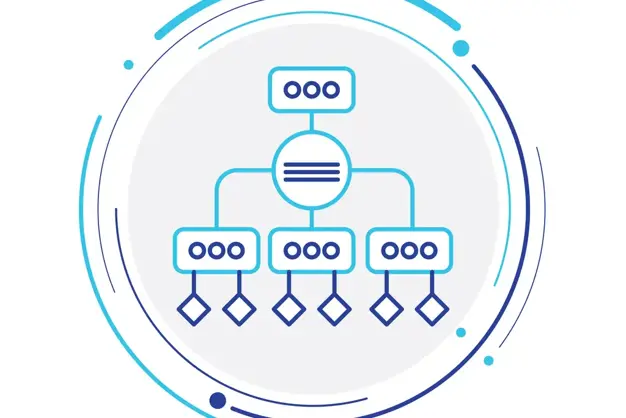
Boost your SEO with smarter internal linking. Discover how to improve SEO, user experience, and conversions in 2025.

Between algorithm updates and increases in digital ad spend, you may be wondering, is SEO dead? SEO is not dead, but these tactics are outdated.